ADNOC Vendor Registration: Complete Guide for Suppliers in UAE
ADNOC vendor registration is your gateway to securing contracts with the UAE’s largest energy corporation and accessing billions in procurement opportunities.
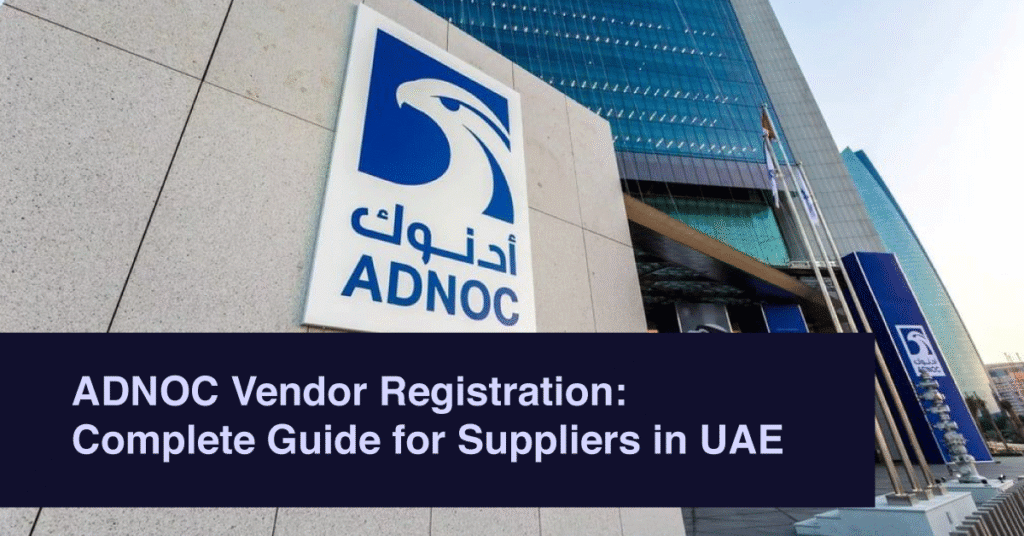
ADNOC vendor registration is your gateway to securing contracts with the UAE’s largest energy corporation and accessing billions in procurement opportunities. The Abu Dhabi National Oil Company (ADNOC) awarded AED 65.7 billion in contracts to nearly 400 local suppliers in the first half of 2025 alone, with plans to channel an additional AED 200 billion into the UAE economy through its In-Country Value (ICV) program over the next five years.
Understanding the registration framework requires navigating multiple platforms, meeting stringent eligibility criteria, and demonstrating technical and financial capabilities that align with ADNOC’s procurement standards. This guide breaks down every stage of the ADNOC vendor registration process with actionable steps, documentation checklists, and insider insights that help you avoid common pitfalls and accelerate approval timelines.
What is the difference between supplier and vendor registration?
ADNOC structures its registration framework into distinct pathways based on what your business provides. Supplier registration applies to companies offering materials, equipment, spare parts, and consumables that support ADNOC’s operational infrastructure. This category covers manufacturers, distributors, and traders who supply tangible products across exploration, production, refining, and distribution operations.
Vendor registration targets service providers, contractors, and consultants who deliver technical services, maintenance contracts, engineering solutions, and specialized expertise. Both registration types connect through the SAP Ariba platform and ADNOC Supplier Hub, creating a unified ecosystem where companies access procurement opportunities, submit tender responses, and manage ongoing contracts.
The practical distinction matters because documentation requirements differ slightly. Suppliers typically emphasize product specifications, manufacturing capabilities, and quality certifications, while vendors highlight service delivery track records, technical competencies, and project portfolios. Identifying your correct classification early prevents registration delays and ensures you target relevant procurement categories from the start.
Expert tip: Many businesses qualify for both supplier and vendor classifications. If your company manufactures equipment and provides installation services, pursue dual registration to maximize tender eligibility across ADNOC’s 15 subsidiaries, which span upstream exploration (ADNOC Onshore, ADNOC Offshore, ADNOC Drilling) to downstream operations (ADNOC Distribution, ADNOC Logistics & Services).
Do I need an Abu Dhabi license for ADNOC vendor registration?
License requirements represent the most critical eligibility barrier for ADNOC vendor registration. Your business needs a mainland Abu Dhabi trade license issued by the Department of Economic Development (DED) with Supreme Petroleum Council (SPC) approval. This requirement stems from ADNOC’s mandate to prioritize local content development and support Abu Dhabi’s economic diversification strategy.
Companies with Dubai or other emirate licenses cannot directly register as ADNOC vendors. Free zone entities face case-by-case evaluation with significantly lower approval rates. The Abu Dhabi mainland license requirement extends beyond mere registration to reflect ADNOC’s commitment to its ICV program, which measures and rewards suppliers who contribute to the UAE economy through local hiring, procurement, and manufacturing.
Overseas manufacturers face additional complexity. They cannot register directly with ADNOC but must partner with an Abu Dhabi-based vendor or establish a local presence through a mainland entity with qualifying ownership structures. This partnership model requires formal agency agreements or distribution arrangements that demonstrate local value creation.
Expert tip: Before initiating registration, verify your trade license activities align precisely with ADNOC’s Work/Product Group classifications available on the ADNOC Supplier Hub. License activity mismatches cause the majority of registration rejections. If your current license lacks relevant activities, amend your license before starting the registration process to avoid automatic disqualification during the technical review stage.
What documents do I need for ADNOC vendor registration?
Preparing comprehensive documentation before initiating registration accelerates approval timelines and prevents back-and-forth clarification requests that extend processing by weeks. The mandatory document portfolio includes your valid UAE trade license with clear visibility of business activities, VAT registration certificate showing your Tax Registration Number (TRN), and complete ownership documentation including Emirates IDs for UAE shareholders and passport copies for foreign shareholders.
Financial documentation requirements vary by company maturity. Established businesses must provide audited financial statements covering the most recent two fiscal years, demonstrating financial stability and capacity to fulfill contracts. Newly established companies may submit unaudited financials accompanied by bank reference letters confirming creditworthiness and operational capital availability.
Technical certifications significantly strengthen your registration profile. ISO certifications (9001 for quality management, 14001 for environmental management, 45001 for occupational health and safety) demonstrate systematic compliance with international standards that mirror ADNOC’s operational expectations. Industry-specific certifications (API for oil and gas equipment, ASME for pressure vessels, CE marking for machinery) validate product conformity for technical evaluations.
The Ministry of Labour requirements include an updated company organizational chart and a detailed employee list showing Abu Dhabi-based staff with their roles, nationalities, and work permit details. This documentation feeds directly into ICV calculations, where local hiring significantly impacts your competitiveness for contract awards.
Expert tip: Create a digital document library organized by category before accessing the registration portal. Scan all documents at high resolution (minimum 300 DPI) and save them as PDFs under 5MB each to prevent upload failures. Translate Arabic documents into English using certified translation services, as ADNOC’s technical reviewers often require English versions for efficient processing. Keep digital copies of previous project contracts, purchase orders, and completion certificates, these provide powerful evidence of relevant experience during technical evaluations.
Step-by-Step Registration Process
The ADNOC vendor registration process follows a multi-stage progression that requires careful attention at each checkpoint. Understanding what happens at each stage helps you anticipate requirements and prepare appropriate responses to evaluation queries.
Stage 1: SAP Ariba Account Creation
Registration begins on the SAP Ariba platform, ADNOC’s procurement technology backbone. Navigate to the Ariba Network registration portal and create a new supplier account using your business email domain (avoid personal Gmail or Yahoo addresses, as they signal unprofessionalism). During account setup, you’ll provide basic company information including legal business name exactly as it appears on your trade license, primary business address, and company registration numbers.
The Ariba system generates a unique Ariba Network ID (ANID) upon account activation. This identifier becomes your permanent reference for all ADNOC interactions. Account activation typically occurs within 24 to 48 hours through email verification. Common issues during this stage include duplicate account errors when someone from your company previously created an account and username conflicts. Resolve these by contacting Ariba support with your company registration documents to merge or deactivate duplicate profiles.
Stage 2: ADNOC Supplier Hub Registration
After Ariba activation, access the ADNOC Supplier Hub (supplierhub.adnoc.ae) using your Ariba credentials. The Supplier Hub serves as your central portal for profile management, document submission, and registration status tracking. Begin by completing your company profile with comprehensive details covering business activities, key personnel, authorized signatories, and banking information for future payment processing.
Document upload follows a structured format. The system prompts you to upload each mandatory document into designated fields. Ensure file names clearly identify content (example: “ABC_Company_Trade_License_2026.pdf” rather than “Document1.pdf”) to facilitate reviewer processing. The portal allows you to save progress and return later, but incomplete profiles cannot proceed to evaluation.
Select your relevant Work/Product Groups from ADNOC’s classification taxonomy. This selection determines which procurement opportunities you’ll see after approval. Be strategic but realistic, choosing categories where you have demonstrable experience and capacity rather than selecting everything hoping to maximize opportunities. Over-claiming capabilities triggers deeper scrutiny during technical reviews and may result in rejection.
Stage 3: Supreme Petroleum Council (SPC) Approval
SPC approval represents a mandatory regulatory checkpoint managed by the Abu Dhabi government. This approval confirms your business activities align with Abu Dhabi’s petroleum sector regulations and your company meets national policy requirements for oil and gas sector participation. The SPC review examines your trade license activities, ownership structure, and business model to ensure compliance with emirate-level strategic priorities.
Processing timelines for SPC approval vary from two to six weeks depending on application volume and the complexity of your business structure. Free zone companies and businesses with complex foreign ownership structures typically face longer review periods. You cannot proceed beyond initial profile submission without SPC approval, making this a critical path item in your registration timeline.
Expert tip: Parallel process your SPC approval while preparing your comprehensive documentation package. Submit your SPC application immediately after confirming ADNOC registration intent rather than waiting until you complete all other documentation. This parallelization can reduce your total registration timeline by three to four weeks.
Stage 4: Profile Evaluation and Technical Review
Once your complete profile and SPC approval are in place, ADNOC’s procurement team conducts technical and commercial evaluations. Technical reviewers assess whether your capabilities match your selected Work/Product Groups by examining past project experience, technical certifications, and facility capabilities. Commercial reviewers analyze financial stability through your submitted financials, evaluate your compliance history, and verify all documentation authenticity.
This evaluation stage typically takes two to four weeks for straightforward applications. Complex applications involving multiple product categories, new market entrants without regional experience, or businesses with non-standard ownership structures may require additional clarification rounds that extend timelines. ADNOC may request supplementary information during this phase, respond promptly to avoid being deprioritized in the review queue.
Stage 5: Prequalification for Specific Categories
After profile approval, you must complete prequalification for each Work/Product Group where you want to bid on tenders. Prequalification dives deeper than initial registration by requiring category-specific documentation such as manufacturer authorizations for equipment suppliers, professional liability insurance for service contractors, and detailed technical specifications for specialized products.
Submit comprehensive evidence packages for each category. Equipment suppliers should provide manufacturer datasheets, test certificates, and compliance documentation for relevant standards. Service contractors need detailed CVs of key technical personnel, evidence of similar project completion, and Health, Safety, and Environment (HSE) management system documentation. The more thorough your prequalification submissions, the faster ADNOC’s technical teams can verify capabilities and grant approval.
Stage 6: Receiving Your ADNOC Vendor Code
Upon successful completion of all stages, you receive a system-generated email containing your ADNOC Unified ID (vendor code). This alphanumeric code serves as your permanent identifier across all ADNOC subsidiaries and procurement systems. Your company profile becomes visible to ADNOC procurement managers and project teams who search the vendor database when planning tenders and direct procurement activities.
Vendor code issuance marks your transition from applicant to approved supplier, unlocking access to tender invitations, request for quotation (RFQ) documents, and direct negotiation opportunities across ADNOC’s 15 subsidiaries.
What does ADNOC evaluate during vendor prequalification?
Prequalification extends beyond documentation verification to assess whether your business can reliably deliver on ADNOC’s demanding operational requirements. Understanding evaluation criteria helps you strengthen applications and address potential weaknesses proactively.
ADNOC’s evaluation framework examines technical competency through your track record of similar project delivery, qualified personnel availability, and technical infrastructure adequacy. For equipment suppliers, evaluators verify manufacturing quality systems, testing capabilities, and after-sales support infrastructure. Service contractors face scrutiny of their safety management systems, technician qualifications, and emergency response capabilities.
Financial capacity assessment determines whether your business can fund project mobilization, manage cash flow during payment cycles, and maintain operations during project execution. ADNOC analyzes your working capital ratios, debt-to-equity relationships, and annual turnover relative to typical contract values in your categories. Weak financial positions trigger concerns about project abandonment or quality compromises due to cost pressures.
Compliance and HSE standards receive intense focus given ADNOC’s zero-tolerance approach to safety incidents. Your HSE management system, incident history, and safety training programs undergo detailed review. Companies with poor safety records or inadequate HSE frameworks face rejection regardless of technical or commercial strengths. ADNOC prioritizes protecting its workforce and operational integrity above cost considerations.
Expert tip: During prequalification, emphasize quantifiable achievements rather than generic capability statements. Instead of “experienced in pipeline installation,” provide specifics such as “completed 47 kilometers of 24-inch carbon steel pipeline installation for X project, delivered under budget with zero lost-time incidents across 18 months.” Concrete metrics significantly strengthen technical evaluations and differentiate your submission from competitors making broad capability claims.
How long does ADNOC vendor registration take?
Complete ADNOC vendor registration typically requires eight to twelve weeks from initial account creation to vendor code receipt. This timeline assumes you have all documentation ready, your license activities align with ADNOC’s categories, and your application receives straightforward evaluation without requests for additional information.
Timeline breakdown across stages provides realistic planning benchmarks. Ariba account activation takes one to two days. Initial profile creation and document upload require one to two weeks depending on your documentation readiness. SPC approval processing spans two to six weeks based on application complexity and government processing volumes. ADNOC’s technical and commercial evaluation takes two to four weeks for standard applications. Category-specific prequalification adds another two to three weeks per product group.
Delays commonly arise from incomplete documentation requiring resubmission, license activity mismatches requiring license amendments, and clarification requests during technical evaluation. Building buffer time into your registration planning prevents missed tender opportunities. If you’re targeting specific upcoming tenders, begin registration at least four months before the tender release date to ensure approved status when bids open.
What does ADNOC vendor registration cost?
ADNOC does not charge direct registration fees, making the process accessible to businesses of all sizes. However, indirect costs accumulate through documentation preparation, professional services, and administrative processes.
Budget for document translation and attestation services if your original documents are in languages other than English or Arabic. Notarization and Ministry of Foreign Affairs attestation for overseas company documents can cost AED 1,000 to AED 3,000 depending on document volume and country of origin. Professional photography for facility documentation and product catalogs typically ranges from AED 500 to AED 2,000 based on scope.
Companies often engage business consultants or specialized advisors to navigate the registration process, particularly for SPC approval coordination and technical documentation preparation. Advisory fees vary significantly based on service scope, ranging from AED 10,000 for basic registration support to AED 30,000 or more for comprehensive packages including license amendments, prequalification for multiple categories, and ICV certification coordination.
Expert tip: Avoid common bottlenecks by triple-checking document validity dates before submission. Trade licenses, ISO certificates, and insurance policies must have at least six months of validity remaining at submission time. Submitting documents near expiry triggers automatic rejection, forcing you to restart the process after renewal. Set calendar reminders to renew critical certifications three months before expiry to maintain continuous eligibility.
What opportunities does ADNOC vendor registration unlock?
ADNOC vendor registration transforms your business from external observer to active participant in the UAE’s largest industrial ecosystem. The tangible benefits extend across multiple dimensions that compound over time as you build your ADNOC relationship portfolio.
Contract access represents the most obvious benefit. Approved vendors receive invitations to participate in tenders across ADNOC’s 15 subsidiaries, each managing billions in annual procurement. The procurement scope spans everything from industrial valves and electrical equipment to specialized engineering services and facility management contracts. ADNOC’s commitment to channeling AED 200 billion into the UAE economy through its ICV program over five years signals sustained, predictable demand for registered suppliers.
Network effects amplify your market position beyond direct ADNOC contracts. Registration validates your capabilities to ADNOC’s tier-one contractors, joint venture partners, and industry peers who often require ADNOC approval as a prerequisite for their own vendor panels. This ripple effect opens procurement opportunities with companies like Schlumberger, Halliburton, Baker Hughes, and major EPC contractors operating in ADNOC projects.
Strategic visibility improves through your inclusion in ADNOC’s supplier database, which procurement managers across all subsidiaries search when planning projects and issuing tenders. Your company profile showcases capabilities to decision-makers you couldn’t otherwise access through traditional sales channels. The “Make it with ADNOC” mobile application further enhances visibility by broadcasting purchasing needs and commercial opportunities directly to approved vendors.
ICV program participation becomes possible after registration, offering financial advantages through the unified certification framework shared across ADNOC, Abu Dhabi Ports, Aldar Properties, and Abu Dhabi DED. High ICV scores deliver preferential treatment in contract awards, with some procurement evaluations weighting ICV contribution at 30% to 40% of total scoring. Companies demonstrating strong local value creation through Abu Dhabi employment, local procurement, and emirate-based manufacturing gain significant competitive advantages even against technically superior competitors with low ICV scores.
Post-Registration Account Management
Registration approval marks the beginning rather than the end of your ADNOC relationship management requirements. Active vendors must maintain current profiles, respond promptly to opportunities, and demonstrate continuous compliance with ADNOC’s evolving standards.
How do I maintain my ADNOC vendor status?
Regular profile updates prevent administrative complications that could exclude you from tender invitations. Update your Supplier Hub profile immediately when renewing your trade license, changing key personnel, modifying business activities, or updating contact information. ADNOC’s system automatically flags vendors with expired documentation, potentially suspending their tender eligibility until updates are completed. Schedule quarterly profile reviews to verify all information remains current and accurate.
Monitor your Supplier Hub portal and registered email addresses daily for tender invitations, RFQ releases, and administrative notifications. ADNOC’s procurement timelines often allow limited response windows, sometimes as short as one to two weeks for quotation submissions. Missing these narrow windows due to infrequent portal checking eliminates opportunities regardless of your competitive positioning.
Performance management becomes critical once you secure your first ADNOC contracts. ADNOC tracks vendor performance across multiple dimensions including on-time delivery, quality compliance, safety record, and responsiveness to technical queries. Strong performance histories lead to preferred vendor status, direct negotiation opportunities, and consideration for larger, more complex projects. Conversely, poor performance triggers vendor rating downgrades that affect future tender evaluations and may result in vendor status suspension for serious compliance failures.
Expert tip: Designate a dedicated team member as your ADNOC relationship manager responsible for daily portal monitoring, tender response coordination, and profile maintenance. This person should maintain direct communication channels with ADNOC procurement contacts across relevant subsidiaries, building relationships that provide advance visibility into upcoming opportunities and feedback on your tender submissions. Personal relationships significantly influence vendor selection decisions when technical and commercial proposals are closely matched.
What mistakes should I avoid during ADNOC vendor registration?
License activity misalignment causes the most frequent rejections. Companies apply with trade licenses listing activities that don’t precisely match ADNOC’s Work/Product Group definitions, triggering automatic disqualification during initial screening. Resolve this by obtaining a detailed Work/Product Group list from ADNOC Supplier Hub before registration and comparing it line-by-line against your license activities. If gaps exist, amend your license to add relevant activities before initiating registration.
Incomplete documentation packages delay evaluations by weeks. Applicants frequently submit partially completed profiles, missing mandatory certificates, or expired documents hoping to update them during the review process. ADNOC’s evaluation queue prioritizes complete submissions, pushing incomplete applications to the bottom. Assemble your entire documentation package and verify all documents have sufficient validity periods before beginning profile creation.
Ariba platform navigation issues frustrate first-time users unfamiliar with the system’s structure and terminology. Common problems include duplicate account creation, incorrect user role assignments, and difficulty linking existing Ariba accounts to ADNOC’s specific requirements. Invest time in understanding the Ariba interface through available user guides and tutorial videos before starting data entry to minimize costly mistakes that require support ticket resolution.
Overstating capabilities during prequalification backfires during technical evaluation. Applicants sometimes select every available Work/Product Group hoping to maximize opportunity access, only to face detailed technical questions they cannot adequately address. This approach damages credibility and may result in complete rejection rather than approval for the categories where you genuinely qualify. Apply strategic focus by selecting categories where you can provide compelling evidence of successful past performance.
When should I consider professional registration support?
Professional advisors provide value when your internal team lacks bandwidth, relevant experience, or established government relationships that expedite approvals. Consider external support when facing tight timeline pressures for upcoming tender opportunities, navigating complex ownership structures requiring strategic positioning, or managing your first UAE market entry without local operational history.
Specialized consultants offer distinct advantages in SPC approval facilitation, where established relationships and procedural knowledge accelerate processing timelines. They understand exactly which documentation formats government reviewers expect and can preemptively address concerns that would otherwise trigger clarification requests. For license amendments required to align activities with ADNOC categories, advisors coordinate efficiently with DED to expedite approval processes that might otherwise stretch across months.
Documentation preparation support proves valuable when your team lacks technical writing expertise for comprehensive prequalification submissions. Professional advisors understand how ADNOC’s technical evaluators assess capabilities and can structure your submission to emphasize strengths while addressing potential concerns proactively. This expertise significantly increases first-submission approval rates, avoiding costly resubmission cycles.
The strategic decision balances advisory costs against the opportunity cost of delayed market entry and the risk of rejection requiring complete process restarts. For businesses targeting high-value ADNOC contracts where early approval unlocks significant revenue potential, professional support often delivers substantial return on investment through accelerated timelines and higher approval probabilities.
Not sure how this applies to your company?
Naraa handles UAE licensing, FTA registration, filing and bookkeeping end to end. A 20-minute call is usually enough to tell you where you stand.
Frequently asked questions
What is the difference between supplier and vendor registration?
ADNOC structures its registration framework into distinct pathways based on what your business provides. Supplier registration applies to companies offering materials, equipment, spare parts, and consumables that support ADNOC’s operational infrastructure. This category covers manufacturers, distributors, and traders who supply tangible products across exploration, production, refining, and distribution operations.
Do I need an Abu Dhabi license for ADNOC vendor registration?
License requirements represent the most critical eligibility barrier for ADNOC vendor registration. Your business needs a mainland Abu Dhabi trade license issued by the Department of Economic Development (DED) with Supreme Petroleum Council (SPC) approval. This requirement stems from ADNOC’s mandate to prioritize local content development and support Abu Dhabi’s economic diversification strategy.
What ownership structure does ADNOC require?
ADNOC strongly prefers companies with a minimum 51% UAE national ownership for mainland licenses. This ownership threshold directly impacts your ICV certification score, which influences contract award decisions even after successful registration. While 100% foreign-owned companies with appropriate licenses may gain acceptance in specialized categories, they compete at a structural disadvantage during procurement evaluations.
What documents do I need for ADNOC vendor registration?
Preparing comprehensive documentation before initiating registration accelerates approval timelines and prevents back-and-forth clarification requests that extend processing by weeks. The mandatory document portfolio includes your valid UAE trade license with clear visibility of business activities, VAT registration certificate showing your Tax Registration Number (TRN), and complete ownership documentation including Emirates IDs for UAE shareholders and passport copies for foreign shareholders.
What does ADNOC evaluate during vendor prequalification?
Prequalification extends beyond documentation verification to assess whether your business can reliably deliver on ADNOC’s demanding operational requirements. Understanding evaluation criteria helps you strengthen applications and address potential weaknesses proactively.
How long does ADNOC vendor registration take?
Complete ADNOC vendor registration typically requires eight to twelve weeks from initial account creation to vendor code receipt. This timeline assumes you have all documentation ready, your license activities align with ADNOC’s categories, and your application receives straightforward evaluation without requests for additional information.
What does ADNOC vendor registration cost?
ADNOC does not charge direct registration fees, making the process accessible to businesses of all sizes. However, indirect costs accumulate through documentation preparation, professional services, and administrative processes.
What opportunities does ADNOC vendor registration unlock?
ADNOC vendor registration transforms your business from external observer to active participant in the UAE’s largest industrial ecosystem. The tangible benefits extend across multiple dimensions that compound over time as you build your ADNOC relationship portfolio.
How do I maintain my ADNOC vendor status?
Regular profile updates prevent administrative complications that could exclude you from tender invitations. Update your Supplier Hub profile immediately when renewing your trade license, changing key personnel, modifying business activities, or updating contact information. ADNOC’s system automatically flags vendors with expired documentation, potentially suspending their tender eligibility until updates are completed.
What mistakes should I avoid during ADNOC vendor registration?
License activity misalignment causes the most frequent rejections. Companies apply with trade licenses listing activities that don’t precisely match ADNOC’s Work/Product Group definitions, triggering automatic disqualification during initial screening. Resolve this by obtaining a detailed Work/Product Group list from ADNOC Supplier Hub before registration and comparing it line-by-line against your license activities.
When should I consider professional registration support?
Professional advisors provide value when your internal team lacks bandwidth, relevant experience, or established government relationships that expedite approvals. Consider external support when facing tight timeline pressures for upcoming tender opportunities, navigating complex ownership structures requiring strategic positioning, or managing your first UAE market entry without local operational history.