Visa Stamping Fees in Dubai | Complete Cost Guide 2026 | Naraa
Understanding visa stamping fees in Dubai is essential for anyone planning to work or live in the UAE in 2026.
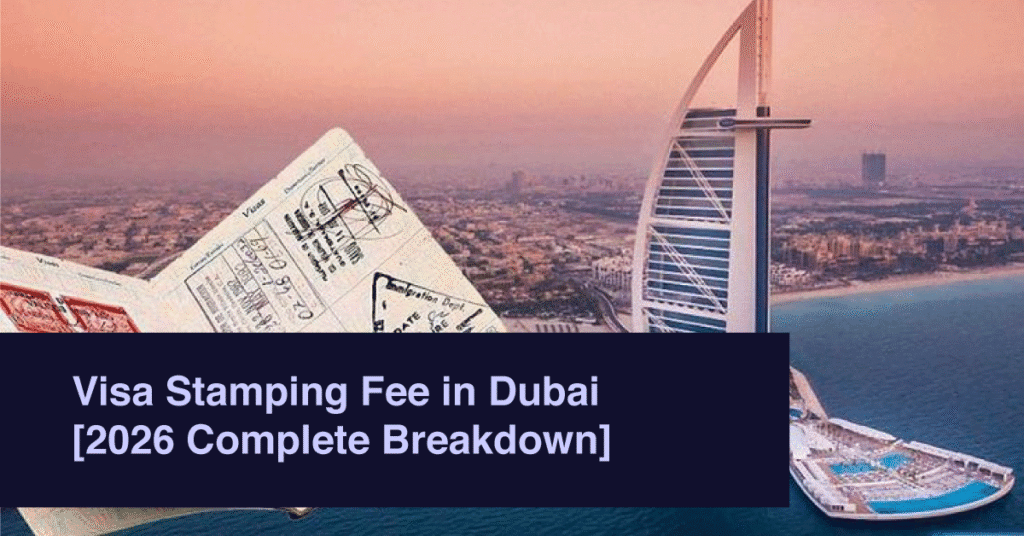
Understanding visa stamping fees in Dubai is essential for anyone planning to work or live in the UAE in 2026. The basic visa stamping fee ranges from AED 370 to AED 560 depending on your visa type and validity period. However, the total cost including medical tests, Emirates ID, and service fees can reach AED 3,000 to AED 7,000 for employment visas. This guide breaks down every cost component, hidden charges, and procedural requirements so you can budget accurately and avoid surprises during your Dubai visa journey.
What is Visa Stamping in Dubai?
Visa stamping is the final administrative step that officially confirms your legal residency status in the UAE. Since April 2022, the UAE eliminated physical passport stamps and integrated residency information into your Emirates ID card. This means your Emirates ID now serves as your official residence visa document, storing all personal and professional details in its electronic chip.
The process is managed by the General Directorate of Residency and Foreigners Affairs (GDRFA) and involves submitting your medical fitness certificate, Emirates ID application, and required documents. Visa stamping typically occurs after you receive your entry permit approval and complete mandatory health screenings. The entire procedure usually takes 2 to 10 working days from document submission to final approval.
For those entering Dubai from abroad, visa stamping completes your transition from entry permit holder to legal resident. If you are already in the UAE on a different visa type, this process is called a status change and follows similar steps with slightly different fees.
2026 Visa Stamping Fee Breakdown by Category
The visa stamping fees in Dubai vary significantly based on your visa category, sponsor type, and validity duration. Understanding these differences helps you budget accurately for your specific situation.
Employment Visa Stamping Fees
Employment visas are the most common category for professionals moving to Dubai. The visa stamping component alone costs between AED 370 to AED 560 for a standard 2-year validity. However, this is just one part of the total employment visa cost.
| Cost Component | Fee Range (AED) | Mandatory |
| Visa Stamping Fee | 370 – 560 | Yes |
| Medical Examination | 250 – 800 | Yes |
| Emirates ID (2 years) | 270 – 570 | Yes |
| Labour Card Fee | 300 – 5,000 | Yes (category-based) |
| Health Insurance | 700 – 1,100 | Yes |
| Typing Center Services | 100 – 300 | Usually |
| Total Estimated Cost | 3,000 – 7,000 | – |
Labour card fees depend on your education qualification, with bachelor’s degree holders paying AED 300 (Category 1), diploma holders paying AED 600 to AED 2,000 (Category 2), and high school level paying AED 5,000 (Category 3).
Family and Dependent Visa Fees
Family visa stamping costs range from AED 510 to AED 1,500 per person depending on whether your sponsor is a UAE national or an expatriate resident. Each family member requires individual medical tests, Emirates ID applications, and visa stamping.
| Sponsor Type | 2-Year Visa Fee | Emirates ID | Medical Test | Total Per Person |
| UAE Citizen Sponsor | AED 510 | AED 270 – 370 | AED 250 – 300 | AED 1,030 – 1,180 |
| Expatriate Sponsor | AED 560 | AED 270 – 370 | AED 250 – 300 | AED 1,080 – 1,230 |
If you are sponsoring parents, you need a minimum salary of AED 20,000 or AED 19,000 plus accommodation, and must pay a refundable security deposit of AED 2,500.
Investor and Partner Visa Costs
Investor visa stamping fees typically range from AED 500 to AED 800, with total costs varying based on whether you establish a mainland company or freezone business. Mainland visas offer full UAE work flexibility but come with higher costs, while freezone visas have lower fees but restrict work to the specific freezone area.
Complete Cost Calculator for Visa Stamping in Dubai
Beyond the basic visa stamping fees in Dubai, several mandatory and optional expenses significantly impact your total budget. Understanding the complete cost structure prevents financial surprises during your application process.
Government Fees and Mandatory Costs
Entry Permit Fees: Before visa stamping, you need an entry permit costing AED 500 to AED 1,100 for employment categories and AED 300 to AED 800 for visit permits. This is your authorization to enter the UAE and begin the residence visa process.
Medical Fitness Test: All visa applicants must complete health screenings at government-approved centers. Standard medical tests cost AED 250 to AED 350, while express services range from AED 450 to AED 550. The medical examination includes chest X-rays and blood tests screening for infectious diseases.
Emirates ID Fees: The mandatory biometric identity card costs AED 100 per year of validity plus service and typing fees. For a standard 2-year validity, expect to pay approximately AED 270 to AED 370 total.
| Emirates ID Validity | Base Fee | Service/Typing Fees | Total Cost |
| 1 Year | AED 100 | AED 50 – 100 | AED 150 – 200 |
| 2 Years | AED 200 | AED 70 – 170 | AED 270 – 370 |
| 3 Years | AED 300 | AED 70 – 270 | AED 370 – 570 |
ICP Service Fees: Since 2023, the Federal Authority for Identity, Citizenship, Customs, and Port Security (ICP) added a AED 100 service fee to most visa applications. This applies to the unified Emirates ID and residence visa application system.
Optional Service Costs
PRO Service Fees: Public Relations Officer (PRO) services handle the entire visa process on your behalf, costing AED 1,000 to AED 2,000. While optional, these services save time and reduce the risk of application errors, especially for first-time applicants.
Typing Center Charges: Most applicants use typing centers to prepare and submit documents, costing AED 100 to AED 300. These centers ensure your forms are correctly filled and submitted to the appropriate government channels.
Document Attestation: If your educational certificates or marriage certificates require MOFA (Ministry of Foreign Affairs) attestation, expect fees between AED 750 to AED 1,500. Embassy attestation from your home country adds another AED 300 to AED 800.
Translation Services: Non-English documents require certified translation at AED 100 to AED 300 per document.
Step-by-Step Visa Stamping Process
The visa stamping process in Dubai follows a structured sequence that typically takes 2 to 10 working days from start to finish. Understanding each step helps you prepare documents and manage timelines effectively.
Step 1: Obtain Entry Permit Approval
Your employer or sponsor submits an entry permit application to GDRFA along with your passport copy, photograph, and employment contract. Approval usually takes 2 to 5 working days, and the permit is valid for 60 days from issuance.
Step 2: Enter UAE and Complete Medical Examination
Within 30 days of arriving in Dubai, you must complete a medical fitness test at government-approved centers like Amer Centers or Ministry of Health facilities. Book your appointment online through the ICP portal or visit centers directly.
The medical examination includes:
- Chest X-ray for tuberculosis screening
- Blood tests for infectious diseases
- Basic health assessment
- Pregnancy test (for female applicants in certain categories)
Results are typically ready within 24 to 48 hours for standard processing.
Step 3: Apply for Emirates ID
Submit your Emirates ID application through the ICP Smart Services portal, UAEICP mobile app, or authorized typing centers. The unified application system now combines your residence visa and Emirates ID into a single submission, eliminating duplicate paperwork.
Step 4: Status Change (If Applicable)
If you are already in the UAE on a tourist or visit visa, you need an in-country status change costing approximately AED 680 to AED 700. This converts your visit visa to a residence visa without requiring you to exit and re-enter the country.
Step 5: Visa Stamping Submission
Submit your complete documents to GDRFA either directly at their offices in Al Jafiliya, through Amer Centers like the one in Al Quoz Mall, or via the ICP online portal. Required documents typically include:
- Original passport with at least 6 months validity and 2 blank pages
- Entry permit copy
- Medical fitness certificate
- Emirates ID application receipt
- Passport-size photographs
- Sponsor documents (employment contract or establishment card)
Step 6: Approval and Collection
GDRFA processes your application within 48 hours if all documents are complete. Your Emirates ID is issued within 2 to 5 days and serves as your official residence visa. You can track your application status through the ICP website at smartservices.icp.gov.ae or the UAEICP app using your passport number or application reference.
Hidden Costs You Should Know About
Beyond the standard visa stamping fees in Dubai, several hidden expenses can increase your total budget by 10% to 15% if not properly planned. Being aware of these costs helps you avoid financial strain during the application process.
Unexpected Administrative Charges
- Re-medical Testing Fees: If your initial medical test shows abnormal results or expires during processing, you must repeat the examination at AED 500 to AED 800
- Urgent Processing Premiums: Express visa services add 30% to 50% to standard fees, with VIP processing costing an additional AED 500 to AED 1,500
- Security Deposits: Some freezone companies require refundable deposits of AED 500 to AED 2,000 during visa processing
- Courier and Delivery Charges: Document delivery services cost AED 50 to AED 150 depending on your location
- Passport Photographs: Professional visa photos cost AED 20 to AED 50 at authorized centers
Validity Period Considerations
Choosing a 3-year visa validity instead of 2 years reduces your annual cost. The Emirates ID fee for 3 years is AED 370 to AED 570 compared to AED 270 to AED 370 for 2 years, making the per-year cost more economical for longer stays.
Mainland vs Freezone Cost Differences
Mainland employment visas typically cost AED 500 to AED 1,000 more than freezone visas but offer unrestricted work flexibility across all UAE emirates. Freezone visas have faster processing and lower fees but limit your employment to the specific freezone or related entities.
Employment Visa Payment Responsibility
Employers are legally required to cover all employment visa costs including entry permits, medical tests, visa stamping, Emirates ID, labour card fees, and mandatory health insurance. This is a standard obligation under UAE labour law and should be explicitly stated in your employment contract.
If your employer asks you to pay these mandatory fees, this is typically a red flag indicating potential contract violations. Clarify these terms in writing before accepting the job offer to avoid misunderstandings.
Family Sponsorship Costs
For family and dependent visas, the sponsor (whether UAE national or expatriate) bears all costs including visa stamping fees, medical examinations, and Emirates ID applications for each family member. The total expense per dependent ranges from AED 1,030 to AED 1,500 depending on sponsor type and relationship.
Investor and Self-Sponsorship
Individuals establishing their own businesses or obtaining investor visas cover all associated costs personally. These typically range from AED 3,000 to AED 15,000 depending on business structure, freezone selection, and number of employee visas required.
Visa Renewal Costs in 2026
Residence visa renewal follows similar cost structures to initial visa stamping but with some variations in government fees. Planning for renewal expenses ensures continuous legal residency without gaps.
Standard Renewal Fee Breakdown
| Cost Component | Fee Range (AED) | Notes |
| Government Processing Fees | 1,260 – 1,264 | Base renewal cost |
| Labour Card Renewal | 300 – 5,000 | Based on education category |
| Medical Examination | 300 – 800 | Repeat medical required |
| Emirates ID Renewal (2 years) | 274 – 570 | Depends on validity chosen |
| Visa Stamping | 500 – 600 | Residence renewal stamping |
| PRO Service Fees (Optional) | 1,260 – 1,575 | If using professional services |
You must renew your residence visa every 2 to 3 years depending on the validity period you initially selected. Late renewal penalties are AED 20 per day with a maximum fine of AED 1,000.
Renewal Timeline Requirements
Apply for renewal within 30 days after your visa expiry to avoid accumulating daily fines. The renewal process takes approximately 5 to 10 working days, similar to initial applications. Your Emirates ID must also be renewed simultaneously as it is linked to your residence visa validity.
Common Mistakes to Avoid
Navigating the visa stamping process involves several potential pitfalls that can delay approval or increase costs. Avoiding these common errors ensures a smooth application experience.
Document-Related Errors
- Expired Passport Validity: Ensure your passport has at least 6 months validity and 2 blank pages before starting the process
- Incomplete Attestation: Educational certificates and marriage certificates must be attested by MOFA and your home country embassy before submission
- Incorrect Photograph Specifications: Use recent passport-size photos with white background taken at authorized centers to avoid rejection
- Missing Medical Certificate: Complete your medical examination before submitting visa stamping documents as delays can cause application rejection
Timing and Process Mistakes
- Missing 30-Day Medical Window: Complete your medical test within 30 days of UAE arrival or your entry permit may expire
- Delaying Emirates ID Application: Apply for Emirates ID immediately after medical approval to avoid processing delays
- Not Tracking Application Status: Regularly check your application through the ICP portal to respond quickly to any document requests
- Assuming Employer Covers All Costs: Clarify cost-sharing terms in writing before accepting employment to avoid unexpected personal expenses
Financial Planning Errors
- Budgeting Only Stamping Fees: Remember the total cost is AED 3,000 to AED 7,000, not just the AED 370 to AED 560 stamping component
- Ignoring Hidden Costs: Factor in 10% to 15% extra for typing centers, attestations, and potential re-medical tests
- Not Comparing Mainland vs Freezone: Evaluate whether higher mainland costs are justified by work flexibility for your career plans
2026 Regulatory Updates
The UAE continuously modernizes its visa systems to enhance efficiency and align with digital transformation goals. Staying informed about recent changes helps you navigate the process correctly.
Unified Emirates ID and Visa System
The most significant change since April 2022 is the integration of residence visas into Emirates ID cards, eliminating physical passport stamps. This unified application process reduces processing time by 30% to 40% and allows residents to apply through a single form via the ICP portal or UAEICP mobile app.
Airlines now verify your residency status using Emirates ID and passport number through electronic readers rather than looking for physical visa stamps. While the traditional pink visa sticker is no longer required in passports, you can still access a digital copy through the ICP app or print it if needed for specific purposes.
Digital Emirates ID Options
The UAE now offers digital Emirates ID accessible through the UAEICP app and UAE Pass, which can be added to Apple Wallet or Google Wallet. However, for travel purposes, you must carry your physical Emirates ID card as the digital version alone is not sufficient for airport verification.
Service Fee Adjustments
In 2023, the Federal Authority for Identity, Citizenship, Customs, and Port Security added a AED 100 service fee to most visa categories. This fee applies to the unified application system and is mandatory for all new applications and renewals processed through ICP channels.
Not sure how this applies to your company?
Naraa handles UAE licensing, FTA registration, filing and bookkeeping end to end. A 20-minute call is usually enough to tell you where you stand.
Frequently asked questions
What is Visa Stamping in Dubai?
Visa stamping is the final administrative step that officially confirms your legal residency status in the UAE. Since April 2022, the UAE eliminated physical passport stamps and integrated residency information into your Emirates ID card. This means your Emirates ID now serves as your official residence visa document, storing all personal and professional details in its electronic chip.
Who Pays for Visa Stamping Fees?
Understanding payment responsibilities prevents disputes and helps you negotiate employment terms effectively. UAE labour law provides clear guidelines on cost allocation for different visa categories.
How long does visa stamping take in Dubai?
The complete visa stamping process takes 2 to 10 working days from document submission to final approval. GDRFA typically processes applications within 48 hours if all documents are complete, with Emirates ID issuance following within 2 to 5 days.
Can I leave UAE during visa stamping process?
You can travel outside the UAE during the visa stamping process, but it may delay your application as you need to be present for certain steps like medical examinations and Emirates ID collection. It is recommended to stay in the country until your residence visa is fully processed.
What happens if my medical test expires during processing?
Medical fitness certificates are typically valid for 30 days from issuance. If your certificate expires before visa approval, you must repeat the medical examination at your own expense, costing AED 500 to AED 800.
Is health insurance mandatory for Dubai visa stamping?
Yes, basic health insurance is mandatory for all employment visa holders and costs between AED 600 to AED 2,000 annually. Employers are legally required to provide this coverage as part of the employment visa package.
How do I check my visa stamping status?
Track your application status through the ICP website at smartservices.icp.gov.ae or the UAEICP mobile app using your passport number or application reference. You will also receive SMS or email notifications when your application is approved, typically within 48 hours of submission.
What is the difference between visa stamping and Emirates ID?
Visa stamping is the administrative process that grants you residence status, while Emirates ID is the physical biometric card that now serves as your official residence visa document. Since 2022, these two processes are combined into a single unified application.
Can I renew my visa before it expires?
Yes, you can apply for visa renewal within 30 days before or after your expiry date. However, late renewals incur daily fines of AED 20 per day with a maximum penalty of AED 1,000.
Do typing centers charge extra for visa stamping?
Yes, typing centers typically charge AED 100 to AED 300 for preparing and submitting your visa stamping documents. While this is an additional cost, these services reduce errors and ensure proper form completion, especially for first-time applicants.