
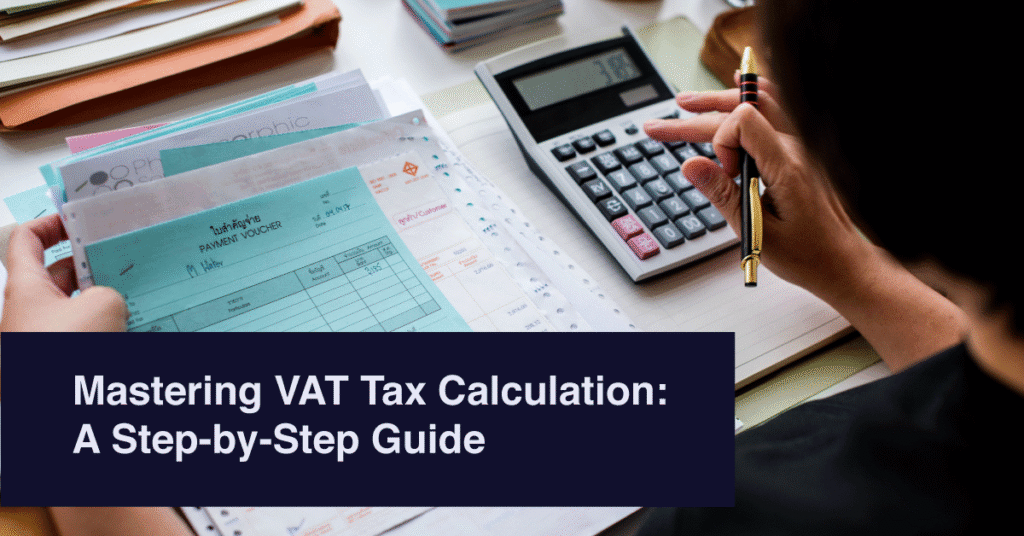
Unlock the secrets of efficient VAT tax calculation with our step-by-step guide. Master this essential skill and streamline your financial management today!
Understanding VAT
Value Added Tax, commonly known as VAT, is a consumption tax placed on a product whenever value is added at each stage of the supply chain, from production to the point of sale. Unlike sales tax, which is paid only by the end consumer, VAT is collected at every step of the production and distribution process. This means that every purchaser, whether they are a manufacturer, wholesaler, or retailer, pays VAT on their purchases and collects VAT on their sales. The net effect is that the end consumer ultimately bears the cost of the VAT.
VAT is a key source of revenue for governments around the world. It is used in more than 160 countries, making it one of the most widely adopted forms of taxation. The tax is usually levied as a percentage of the price, which means that the amount of VAT is proportional to the price of the goods or services. This makes VAT a relatively straightforward tax to apply and collect, which is one reason for its widespread use.
Understanding the mechanics of VAT is crucial for businesses, as it affects pricing, accounting, and cash flow. Failure to comply with VAT regulations can result in significant penalties and interest charges. Therefore, mastering VAT calculation is not just a matter of compliance but also a way to ensure efficient financial management and improve business profitability.
Importance of Accurate VAT Calculation
Accurate VAT calculation is essential for several reasons. Firstly, it ensures compliance with tax laws and regulations. Governments impose strict penalties for underpayment or late payment of VAT, which can include fines, interest charges, and even criminal prosecution in severe cases. Therefore, businesses must ensure that they calculate and remit the correct amount of VAT to avoid these penalties.
Secondly, accurate VAT calculation helps businesses manage their cash flow more effectively. VAT is typically paid on a periodic basis, such as monthly or quarterly. If a business overestimates its VAT liability, it will end up paying more than necessary, which can strain its cash flow. Conversely, underestimating VAT liability can lead to a significant tax bill at the end of the period, which can also disrupt cash flow. Accurate calculation helps businesses budget for their VAT payments and avoid these issues.
Finally, accurate VAT calculation ensures that businesses do not overcharge or undercharge their customers. Overcharging can lead to customer dissatisfaction and loss of business, while undercharging can result in reduced profitability. By accurately calculating VAT, businesses can ensure that they price their goods and services correctly, maintaining customer trust and ensuring profitability.
Key Terms and Concepts in VAT
Before diving into the step-by-step guide for VAT calculation, it’s essential to understand some key terms and concepts. These will provide the foundation for accurate VAT calculation and help you navigate the complexities of VAT compliance.
Output VAT is the VAT a business charges on its sales. When a business sells goods or services, it adds VAT to the sale price and collects this tax from the customer. The total amount of VAT collected from customers is the output VAT.
Input VAT is the VAT a business pays on its purchases. When a business buys goods or services, it pays VAT on the purchase price. This VAT is referred to as input VAT. Businesses can usually reclaim input VAT, reducing their overall VAT liability.
Taxable Supplies refer to goods and services that are subject to VAT. These can include standard-rated supplies, which are subject to the standard rate of VAT, and reduced-rated supplies, which are subject to a lower rate of VAT. Some supplies may also be zero-rated, meaning they are taxable but the VAT rate is zero.
Exempt Supplies are goods and services that are not subject to VAT. Businesses that sell exempt supplies do not charge VAT on these sales, but they also cannot reclaim the input VAT on their purchases related to these supplies.
VAT Registration is a requirement for businesses that exceed a certain turnover threshold. Once registered, businesses must charge VAT on their sales and can reclaim input VAT on their purchases.
Understanding these key terms and concepts is crucial for accurate VAT calculation and compliance. They form the basis for the steps outlined in the following sections.
Step 1: Identifying VAT Rates
The first step in mastering VAT calculation is identifying the relevant VAT rates. Different countries and regions apply different VAT rates, and within a single jurisdiction, there may be multiple rates depending on the type of goods or services being sold. Typically, there are standard rates, reduced rates, and zero rates.
The standard rate is the default rate applied to most goods and services. This rate varies between countries but generally ranges from 15% to 25%. For example, the standard rate in the European Union is 20%, while in the United Kingdom, it is 20%. In some countries, the standard rate may be higher or lower, so it is important to check the specific rate for your jurisdiction.
The reduced rate applies to certain goods and services that are considered essential or beneficial to society. These can include items such as food, books, and medical supplies. The reduced rate is typically lower than the standard rate, ranging from 5% to 10%. For example, in the UK, the reduced rate is 5% and applies to items such as children’s car seats and home energy.
The zero rate applies to goods and services that are taxable but have a VAT rate of 0%. This means that no VAT is charged on these sales, but businesses can still reclaim the input VAT on their purchases. Common examples of zero-rated supplies include exports and certain basic food items.
Accurately identifying the applicable VAT rates for your goods and services is crucial for correct VAT calculation. Using the wrong rate can result in undercharging or overcharging VAT, leading to compliance issues and potential penalties.
Step 2: Determining Taxable and Exempt Supplies
The next step in mastering VAT calculation is determining which of your supplies are taxable and which are exempt. This distinction is critical because it affects how you calculate and report VAT.
Taxable supplies are goods and services that are subject to VAT. These can include standard-rated supplies, reduced-rated supplies, and zero-rated supplies. When making taxable supplies, businesses must charge VAT at the appropriate rate and collect this tax from their customers. They can also reclaim the input VAT on their purchases related to these supplies.
Exempt supplies, on the other hand, are goods and services that are not subject to VAT. This means that businesses do not charge VAT on these sales and cannot reclaim the input VAT on their purchases related to these supplies. Common examples of exempt supplies include financial services, education, and healthcare.
To determine whether your supplies are taxable or exempt, you will need to consult the VAT legislation in your jurisdiction. This legislation will provide a comprehensive list of taxable and exempt supplies, along with any specific rules and conditions that apply.
Accurately identifying taxable and exempt supplies is crucial for correct VAT calculation and compliance. Misclassifying supplies can result in incorrect VAT charges and reporting, leading to compliance issues and potential penalties.
Step 3: Calculating VAT on Sales
Once you have identified the relevant VAT rates and determined which of your supplies are taxable, the next step is to calculate VAT on your sales. This involves applying the appropriate VAT rate to the sale price of your taxable supplies.
To calculate VAT on sales, you will need to multiply the sale price by the applicable VAT rate. For example, if you are selling a product for $100 and the VAT rate is 20%, you would calculate the VAT as follows:
$100 x 0.20 = $20
In this example, the VAT on the sale is $20, and the total amount charged to the customer would be $120 ($100 sale price + $20 VAT).
It is important to ensure that you apply the correct VAT rate to each sale. Using the wrong rate can result in undercharging or overcharging VAT, leading to compliance issues and potential penalties.
Once you have calculated the VAT on each sale, you will need to record this information in your accounting system. This will help you keep track of your output VAT and ensure that you report and remit the correct amount to the tax authorities.
Step 4: Calculating VAT on Purchases
In addition to calculating VAT on sales, businesses must also calculate VAT on their purchases. This involves identifying the input VAT paid on purchases of goods and services and determining whether this input VAT can be reclaimed.
To calculate VAT on purchases, you will need to review your purchase invoices and identify the amount of VAT paid on each purchase. This information is typically provided on the invoice and will include the purchase price, the VAT rate, and the total amount of VAT paid.
Once you have identified the input VAT on each purchase, you can determine whether this VAT can be reclaimed. In general, businesses can reclaim input VAT on purchases related to taxable supplies. However, input VAT on purchases related to exempt supplies cannot be reclaimed.
To reclaim input VAT, you will need to record the input VAT in your accounting system and include it in your VAT return. This will help you offset your output VAT and reduce your overall VAT liability.
Accurate calculation and reclamation of input VAT are crucial for managing your VAT liability and ensuring compliance. Miscalculating input VAT or failing to reclaim eligible VAT can result in overpaying VAT and reducing your profitability.
Common Mistakes in VAT Calculation
Despite the importance of accurate VAT calculation, many businesses make common mistakes that can lead to compliance issues and financial penalties. By understanding these mistakes, you can take steps to avoid them and ensure accurate VAT calculation.
One common mistake is using incorrect VAT rates. As mentioned earlier, different goods and services may be subject to different VAT rates, and using the wrong rate can result in undercharging or overcharging VAT. To avoid this mistake, ensure that you are familiar with the VAT rates applicable to your supplies and consistently apply the correct rate.
Another common mistake is failing to correctly classify taxable and exempt supplies. Misclassifying supplies can result in incorrect VAT charges and reporting, leading to compliance issues. To avoid this mistake, review the VAT legislation in your jurisdiction and consult with a tax advisor if you are unsure about the classification of your supplies.
A third common mistake is not properly recording and reporting VAT. Accurate record-keeping is essential for correct VAT calculation and compliance. Ensure that you maintain detailed records of your sales and purchases, including invoices and receipts, and accurately report this information in your VAT return. Failure to do so can result in discrepancies and potential penalties.
By being aware of these common mistakes and taking steps to avoid them, you can ensure accurate VAT calculation and compliance with VAT regulations.
Tools and Resources for VAT Calculation
To assist with accurate VAT calculation, there are several tools and resources available that can help simplify the process and ensure compliance. These tools can range from accounting software to online calculators and government resources.
Accounting software is one of the most effective tools for VAT calculation. Many accounting software programs are designed to handle VAT calculations automatically, ensuring that the correct VAT rates are applied and that VAT is accurately recorded and reported. Popular accounting software options include QuickBooks, Xero, and Sage.
Online VAT calculators can also be useful for quick and simple VAT calculations. These calculators allow you to enter the sale price and VAT rate, and they will automatically calculate the VAT amount and total price. While online calculators can be helpful for individual transactions, they may not be suitable for businesses with more complex VAT requirements.
Government resources are another valuable source of information and assistance for VAT calculation. Many tax authorities provide detailed guidance on VAT rates, taxable and exempt supplies, and VAT reporting requirements. These resources can help you understand the specific rules and regulations in your jurisdiction and ensure compliance.
By leveraging these tools and resources, you can simplify the process of VAT calculation and ensure accurate and compliant VAT reporting.
Conclusion: Mastering VAT for Business Success
Mastering VAT calculation is an essential skill for businesses of all sizes. Accurate VAT calculation ensures compliance with tax regulations, helps manage cash flow, and ensures correct pricing of goods and services. By following the step-by-step guide outlined in this article, you can unlock the secrets of efficient VAT calculation and streamline your financial management.
Understanding the key terms and concepts in VAT, identifying the relevant VAT rates, determining taxable and exempt supplies, and accurately calculating VAT on sales and purchases are all critical steps in mastering VAT calculation. By avoiding common mistakes and leveraging available tools and resources, you can ensure accurate and compliant VAT reporting.
Ultimately, mastering VAT calculation is not just about compliance; it is about improving your business’s financial management and profitability. With accurate VAT calculation, you can avoid costly penalties, manage your cash flow more effectively, and ensure correct pricing of your goods and services. So take the time to master VAT calculation and set your business on the path to success.
Not sure how this applies to your company?
Naraa handles UAE licensing, FTA registration, filing and bookkeeping end to end. A 20-minute call is usually enough to tell you where you stand.
Frequently asked questions
What is the VAT registration threshold in the UAE?
Registration is mandatory once your taxable supplies and imports exceed AED 375,000 over the previous 12 months, or when you expect to exceed that figure within the next 30 days. Voluntary registration is available from AED 187,500.
When is the VAT return due?
The VAT 201 return and the payment are both due by the 28th of the month following the end of your tax period. Most businesses file quarterly; the FTA assigns monthly periods to businesses with taxable supplies above AED 150 million a year.
What is the penalty for filing a VAT return late?
AED 1,000 for the first late return and AED 2,000 if you file late again within 24 months. It is charged per return, not per day, and it applies to nil returns as well.
What is the penalty for paying VAT late?
Since 14 April 2026 (Cabinet Decision 129/2025) late payment accrues at 14% per annum, calculated monthly on the unpaid balance from the day after the due date until you settle. This replaced the old 2% plus 4% per month regime.
How long must I keep my VAT records?
Five years for VAT purposes, and 15 years for real-estate and capital-asset records. If you are inside the Corporate Tax regime, Article 56 requires seven years, so seven years is the figure to work to.